
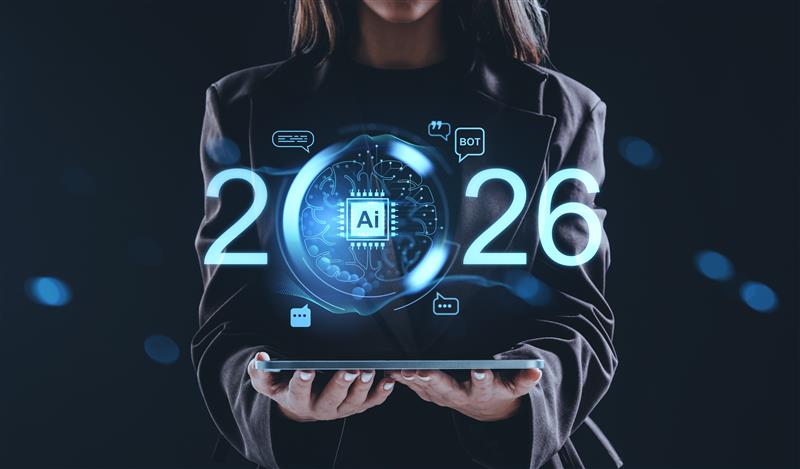
How the market is expected to evolve, according to industry trends
As we move toward 2026, marketing trends are changing in significant ways. As a result, brands need to be prepared for what lies ahead. This transformation is happening at an accelerated pace driven by artificial intelligence, which will take center stage in future projections, offering both opportunities and challenges for the market.
Here are some key trends:
1. The rise of AI agents and changes in consumer behavior
Artificial intelligence (AI) will play a central role in consumer behavior, with AI agents managing purchases, personalized services, and even entertainment choices autonomously. These agents will be able to anticipate consumer needs based on data. In an interview with Forbes, Fábio Sambugaro, VP of Latin America SMB and Enterprise, highlighted that automation already reduces operational effort in repetitive tasks by up to 40%, allowing teams to focus on strategic activities. With 88% of people ignoring repetitive content and 80% expecting personalization, AI will enable more customized experiences, requiring brands to adopt clear and strategic communication.
2. The role of innovation in brand growth
Research by Kantar shows that over the past two decades, brands such as Apple, Amazon, and Google have been pioneers in transforming their categories, resulting in an impressive USD 6.6 trillion in incremental value. In the coming years, this approach combining calculated risk-taking with disruptive innovation will become even more essential. Brands that continue to challenge the status quo will gain a significant competitive advantage and will be able to grow in a strong and consistent way.
The Kantar study also emphasizes that while short-term metrics have their value, an excessive focus on them can limit a brand’s potential to establish itself in a unique and lasting way. True differentiation comes from a culture of experimentation, where failures are seen as part of the learning process, allowing brands to anticipate market changes.
3. The relevance of micro-communities on social media
Many people are moving away from large platforms in search of micro-communities—smaller digital spaces centered on hobbies, cultural niches, knowledge forums, and thematic groups that offer a more personalized connection. This model allows users to interact with others who share common interests and values.
4. The rise of inclusive marketing
Inclusive marketing is set to become an essential practice for brands seeking to connect authentically and meaningfully with an increasingly diverse audience. Beyond visual diversity, inclusive marketing must incorporate values such as empathy, accessibility, and inclusion into its strategies, with the goal of fostering an environment of respect and belonging.
5. The importance of creator-generated content
According to Kantar’s Marketing Trends 2026 report, 61% of marketing professionals plan to increase investment in content creators, which puts greater pressure on demonstrating clear results and impact on brand building. Campaigns built on consistent ideas and extended across multiple channels are 2.5 times more effective than they were ten years ago, but only 27% of influencer-created content is truly aligned with the brand. By 2026, it will be necessary to move from one-off actions to long-term creative platforms that integrate the brand with the creators’ work. For CMOs, this means establishing clear guidelines and metrics to ensure influencers can remain authentic in their collaborations.
6. Convergence between data and retail media
According to information from Sebrae, the convergence between data and media in retail will be key to meeting the needs of a more informed and demanding consumer. In this context, brands are increasingly focused on connecting with their audiences in an authentic way. The use of data goes beyond simple segmentation, enabling more personalized offers and communication aligned with consumer values and expectations. Technologies such as artificial intelligence will play a fundamental role in this process, adjusting critical elements such as pricing, inventory, and even media campaigns in real time, always with the goal of delivering a seamless and frictionless experience.
Marketing trends are becoming increasingly complex and dynamic. For this reason, relying on specialists who closely follow these changes will be essential to achieving desired goals. For companies looking to stand out and generate real market impact, investing in professionals is key to ensuring that every action is designed to deliver concrete and lasting achievements.